
Affordable and Sustainable Pricing
Sliding Scale Pricing
I use a sliding scale to make nature therapy and life coaching as accessible and sustainable as possible. The model is informed by the Green Bottle framework developed by Worts & Cunning, which recognises that we do not all stand on the same financial ground. Some of us are resourced and steady, some are careful but stable, some are navigating real constraint, and some find themselves in a season of abundance with capacity to pay forward opportunity for others. The scale invites you to choose the fee that reflects your current financial reality, not your worth. Where parents/carers or others are paying on behalf of you, please choose fee that reflects their financial reality.
I hold a simple principle: practitioners deserve to be paid fairly, and clients deserve services that thoughtfully recognise the diverse economic contexts in which we live. As an independent practitioner, I do not receive external funding to subsidise reduced rates. My full fees support the full cost of providing high quality, ethical care and sustain my livelihood.
When considering where you sit on the scale, it can be helpful to reflect on the difference between sacrifice and hardship. If paying would require adjusting your spending but not harm your ability to meet basic needs, this is a sacrifice. If it would impact your ability to cover essentials such as food, housing, or transport, this is hardship. The lower end of the scale is intended to support those experiencing genuine financial hardship, while recognising that others may still need to make thoughtful sacrifices.
I do not ask for income verification. I trust your integrity and recognise that life circumstances can change. I ask you to be mindful that if you purchase a price at the lowest end of the scale when you can truthfully afford a higher ticket prices you are limiting access to those who truly need this support.
When those who are able choose to pay at the higher end of the scale, it helps create space for others who may need a lower fee. In this way, the financial arrangement becomes part of a respectful, transparent partnership grounded in integrity and shared responsibility.
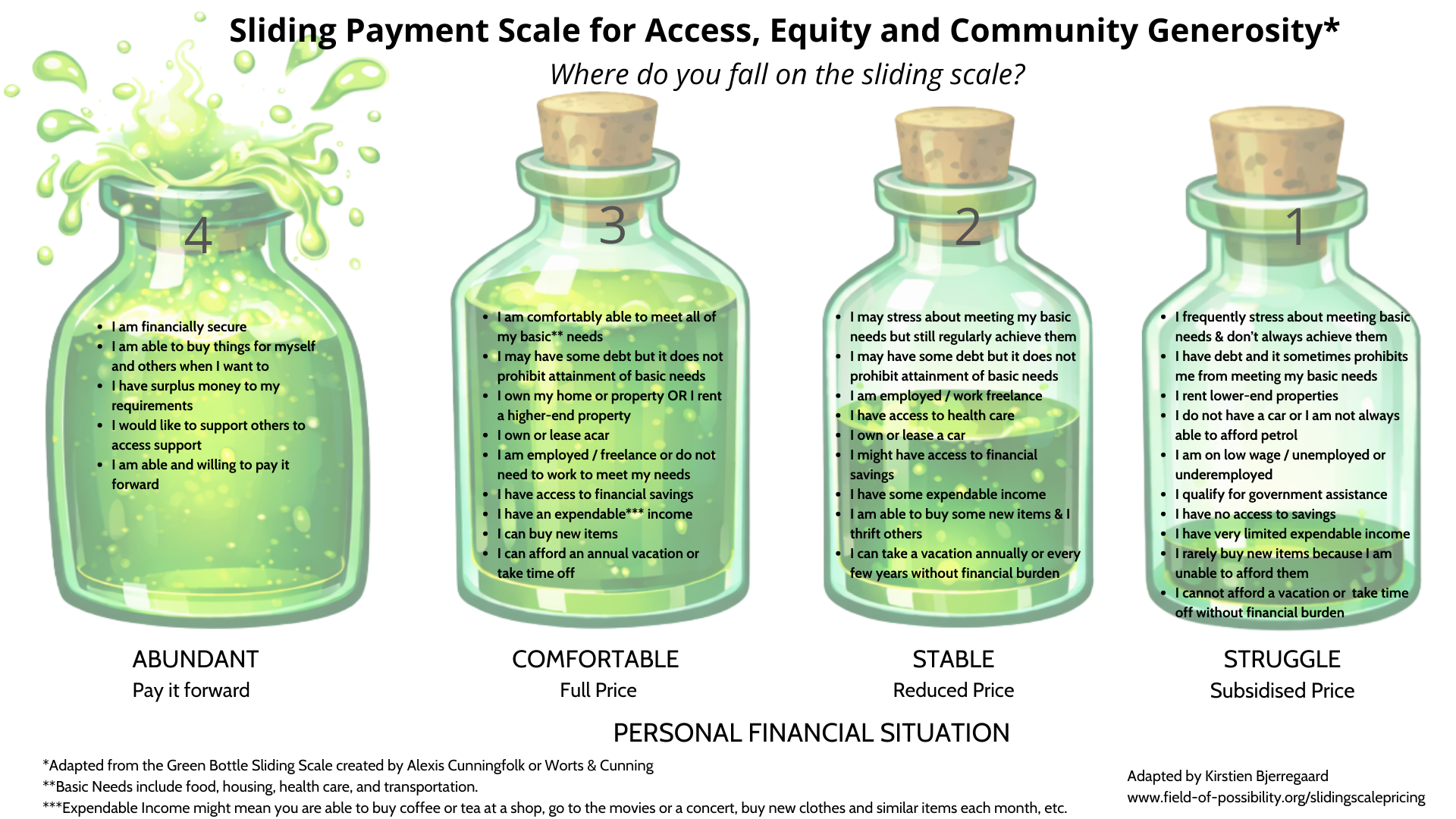
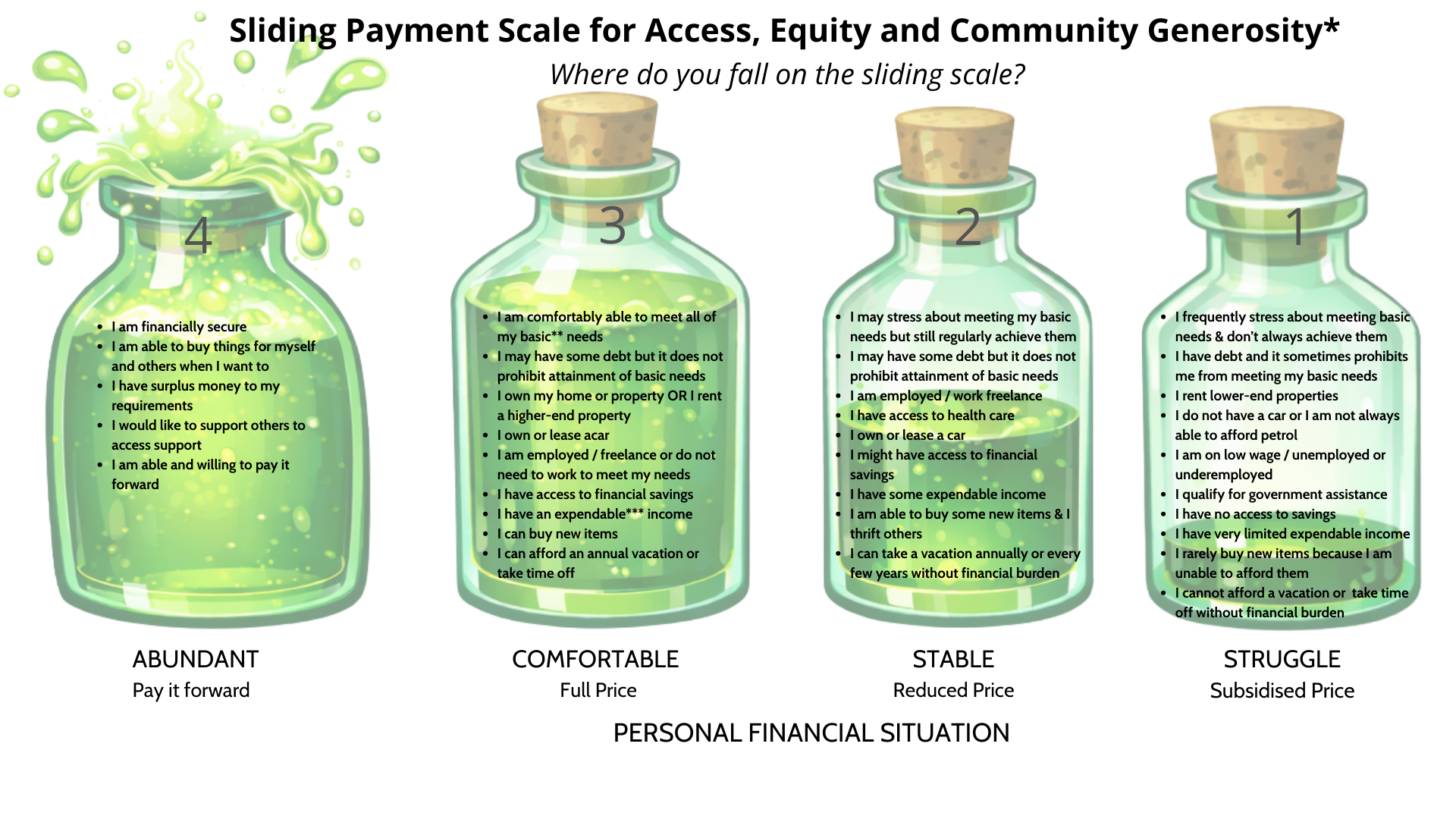
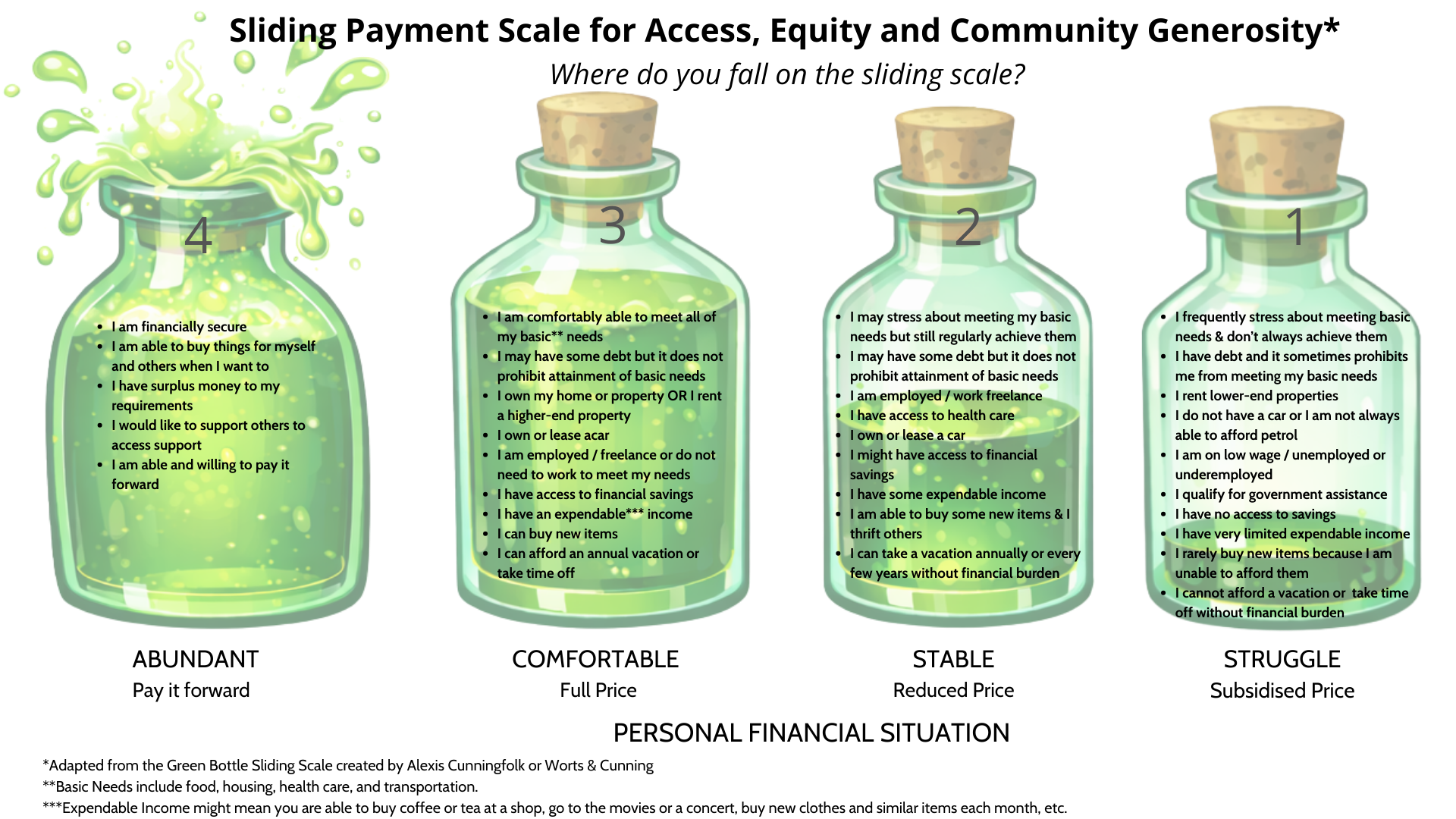
Image adapted from Worts and Cumming's green bottle sliding scaleSliding Scale that supports principles of Access, Equity and Community Generosity
Offered as a guidance rather than to be applied exactly
Bottle 4 - Abundant
I am financially secure
I am able to buy things for myself and others when I want
I have surplus money to my requirements
I would like to support others to access support
I am able and willing to gift it forward.
Bottle 3 - Comfortable
I am comfortably able to meet all of my basic* needs
I may have some debt but it does not prohibit attainment of basic needs
I own my home or property OR I rent a higher-end property
I own or lease a car
I am employed / freelance or do not need to work to meet my needs
I have access to financial savings
I have an expendable** income
I can always buy new items
I can afford an annual vacation or take time off
Bottle 2 - Stable
I may stress about meeting my basic needs but still regularly achieve them
I may have some debt but it does not prohibit attainment of basic needs
I own or lease a car, or choose not to have one.
I rent or own my home
I am employed / freelance or do not need to work
I might have access to financial savings
I have some expendable income
I am able to buy some new items & I thrift others
I can take a vacation annually or every few years without financial burden
Bottle 1 - Struggle
I frequently stress about meeting basic needs & don’t always achieve them
I have debt and it sometimes prohibits me from meeting my basic needs
I rent lower-end properties or have unstable housing
I do not have a car and/or have limited access to a car but I am not always able to afford gas
I am unemployed, underemployed or on minimum wage
I qualify for government assistance
I have no access to savings
I have no or very limited expendable income
I rarely buy new items because I am unable to afford them
I cannot afford a vacation or have the ability to take time off without financial burden
* Basic Needs include food, housing, health care, and transportation.
** Expendable Income might mean you are able to buy coffee or tea at a shop, go to the movies or a concert, buy new clothes, books, and similar items each month, etc.
1:1 Sessions
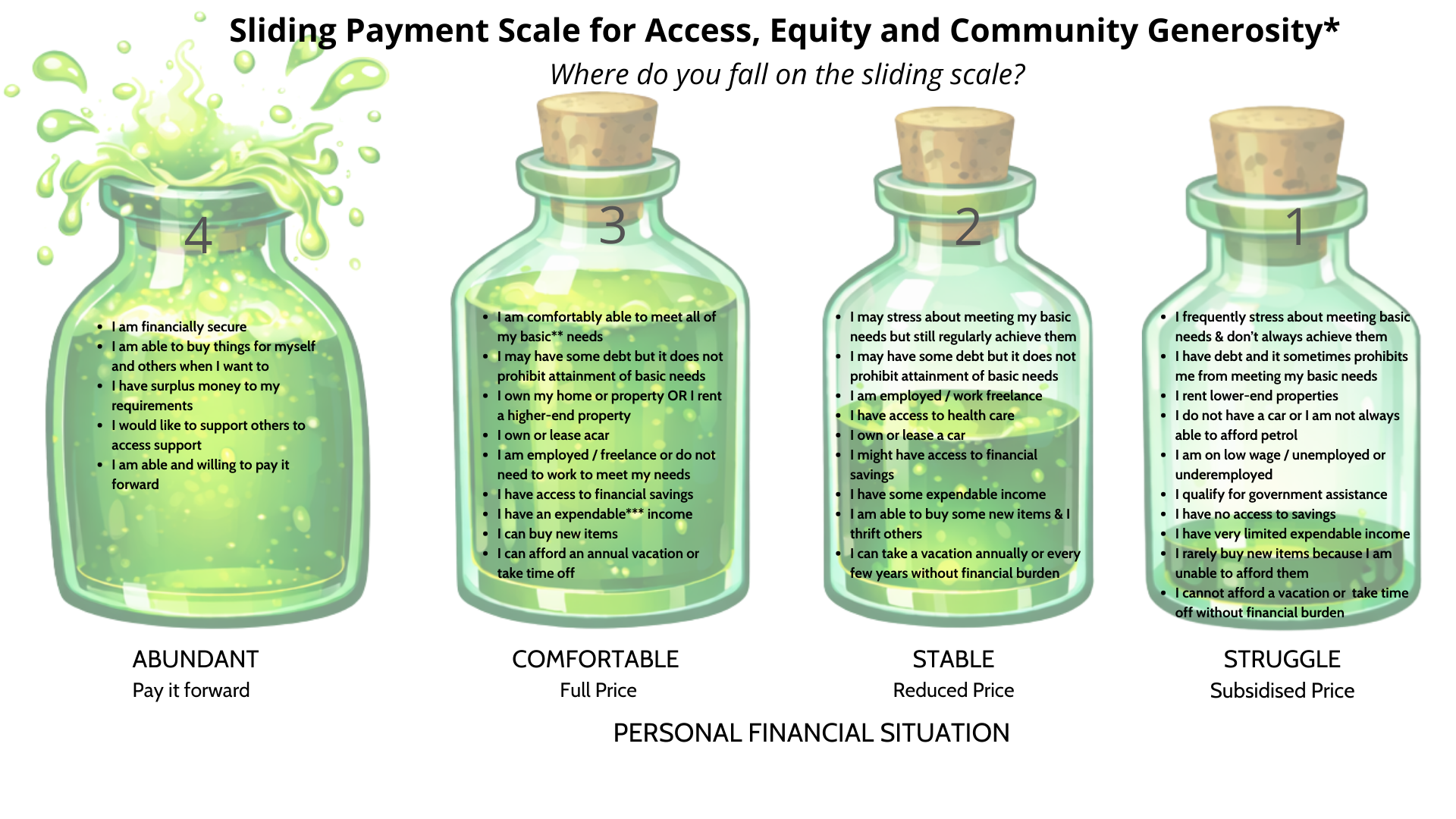
I offer sliding scale pricing so as to make the coaching and nature therapy as accessible and sustainable as possible. Please let me know which bottle you are at.
1 hour 1:1 Session
Bottle 4 (pay it forwards) = £90+tip*
Bottle 3 (full price) = £90
Bottle 2 (reduced price) = £70
Bottle 1 (subsidised price) = £50
1.5 hour 1:1 Session
Bottle 4 (pay it forwards) = £135+tip*
Bottle 3 (full price) = £135
Bottle 2 (reduced price) = £115
Bottle 1 (subsidised price) = £75
*Tip amount goes towards paying forward a subsidised session for someone else
Booked as block of 6 hours**
Bottle 4 (pay it forwards) = £510+tip*
Bottle 3 (full price) = £510
Bottle 2 (reduced price) = £390
Bottle 1 (subsidised price) = £290
**to be taken within 3 months
1:1 Companionship Packages
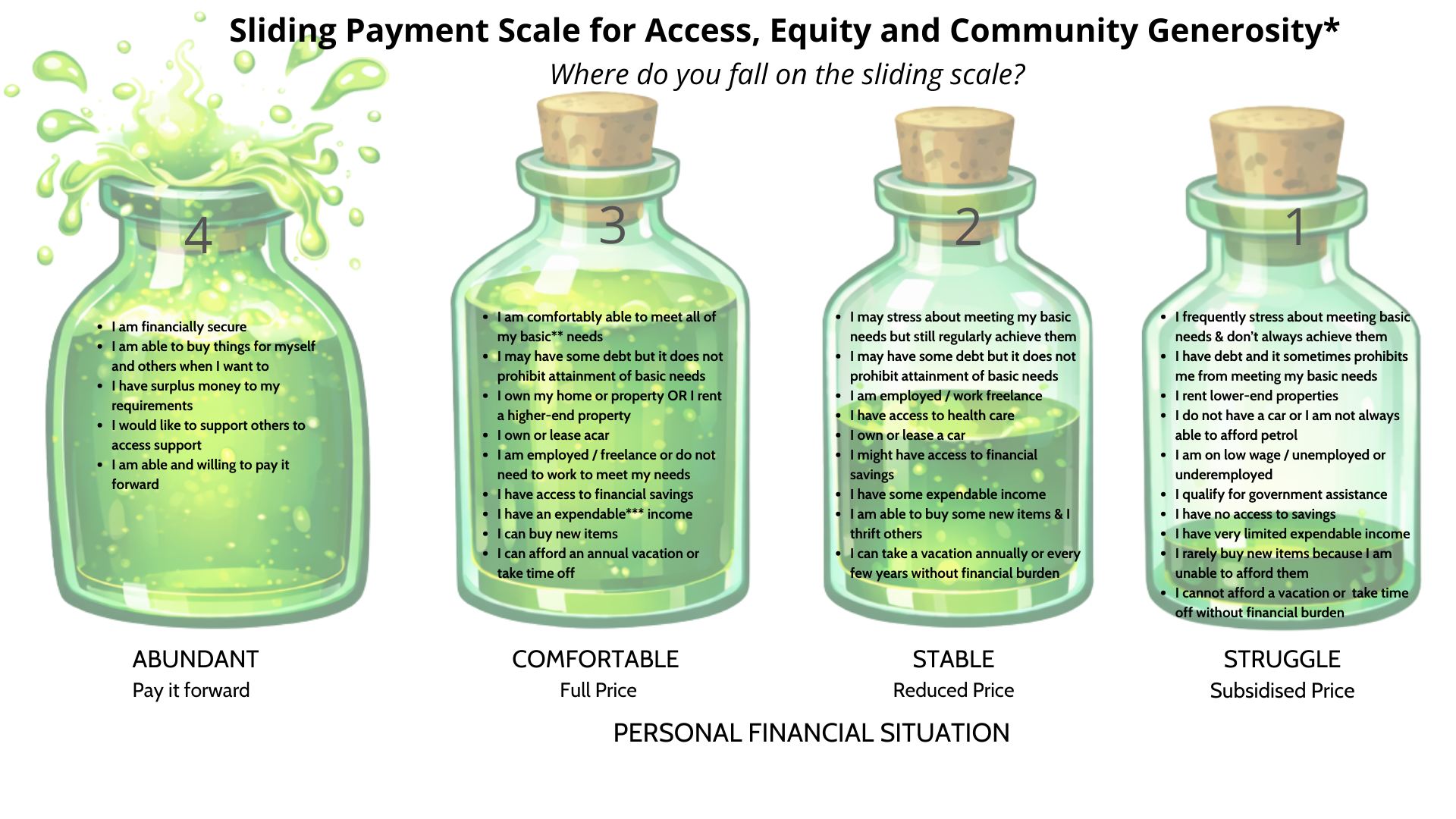
I offer sliding scale pricing so as to make the coaching and nature therapy packages as accessible and sustainable as possible. Please let me know which bottle you are at, and I will send through the payment link.
Packages
Price depends on formation and length of package.
Eg. - full cost of 1 month package* is £1,200
Bottle 4 (pay it forwards) = 100%+tip*
Bottle 3 (full price) = 100%
Bottle 2 (reduced price) = 85%
Bottle 1 (subsidised price) = 65%
*Tip goes towards covering cost of subsidised package for someone else
**1 month package includes equivalent of 2 full days on either moor/coast/field with 1 hr pre session and 1 hr follow up session in person or online. Regenerative time in natural pool, sauna and field. Support between sessions. Resources.
Nature Immersion Coaching Retreats
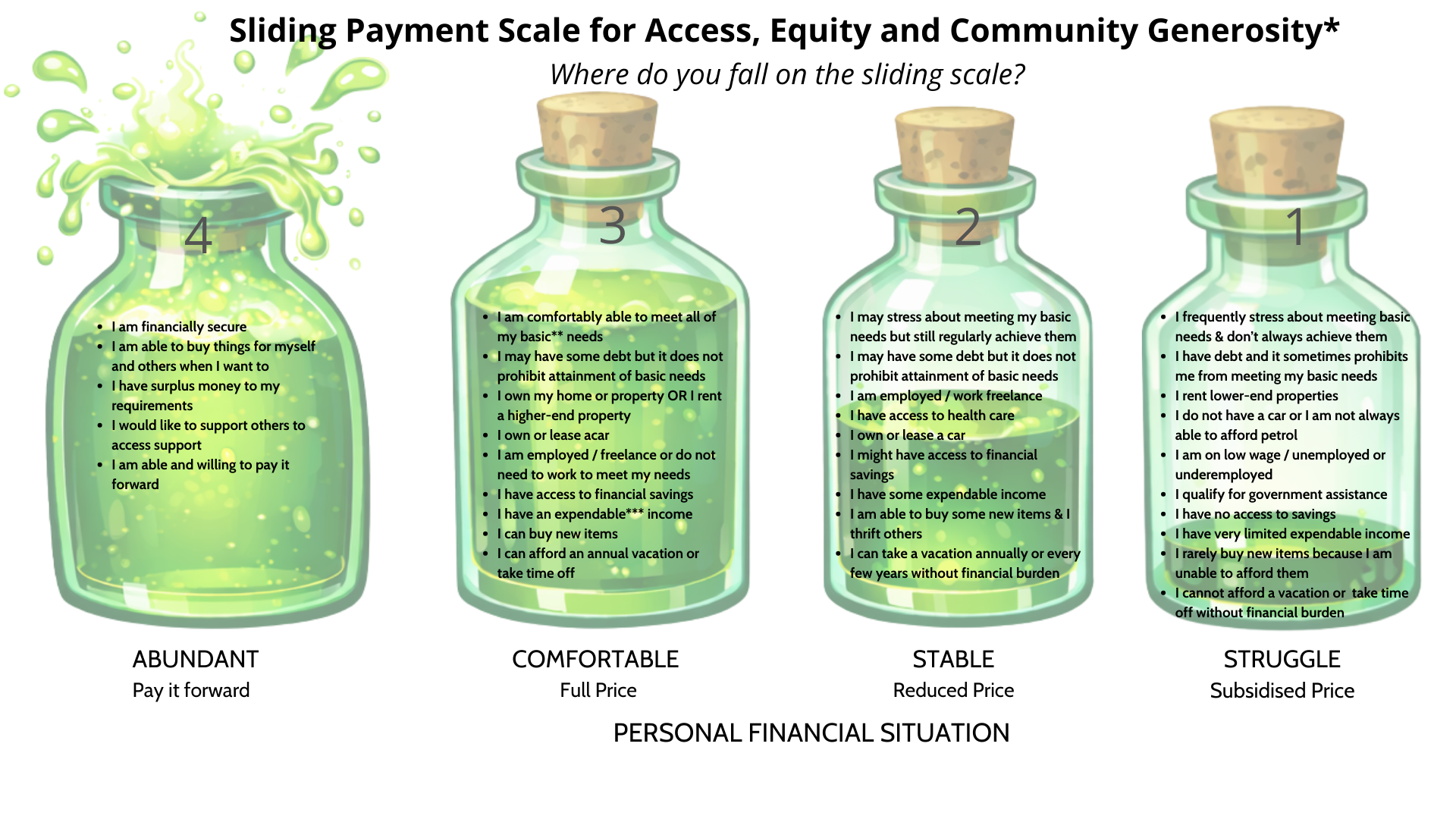
I offer sliding scale pricing so as to make the coaching and nature therapy packages as accessible and sustainable as possible. Please let me know which bottle you are at, and I will send through the payment link.
Retreats
Price depends on formation and length of retreat
Eg. - full cost of 3 day immersion retreat* is £1,850
Bottle 4 (pay it forwards) = 100%+Tip*
Bottle 3 (full price) = 100%
Bottle 2 (reduced price) = 85%
Bottle 1 (subsidised price) = 65%
*+Tip amount goes towards cost of subsidised rate for someone in need.
**3 day immersion retreat includes equivalent of 3 full days on either moor/coast/field (food and drink provided) with 1 hr pre session and 2 hr follow up session in person or online. Regenerative time in natural pool, sauna and field. Support between sessions. Resources.
Accommodation is available in luxurious shepherds hut for additional cost or there is a variety of alternative options near by.
Sessions for Couples
I offer sliding scale pricing so as to make the coaching and nature therapy as accessible and sustainable as possible. Please let me know which bottle you are at.
1.5 hour Couple Session
Bottle 4 (pay it forwards) = £150+tip
Bottle 3 (full price) = £150
Bottle 2 (reduced price) = £120
Bottle 1 (subsidised price) = £90
Connect and Rejuvenate Package*
Bottle 4 (pay it forwards) = £1,200+Tip**
Bottle 3 (full price) = £1,200
Bottle 2 (reduced price) = £900
Bottle 1 (subsidised price) = £750
*2 month package includes time in field, pool and sauna
*+Tip amount goes towards cost of subsidised rate for a couple in need of it.
Relationship Coaching Retreat
Price depends on formation and length of retreat
Eg. - full cost of 3 day immersion retreat* is £2,250
Bottle 4 (pay it forwards) = 100%+tip**
Bottle 3 (full price) = 100%
Bottle 2 (reduced price) = 85%
Bottle 1 (subsidised price) = 65%
*+Tip amount goes towards cost of subsidised rate for someone in need.
3 day immersion retreat includes equivalent of 3 full days on either moor/coast/field (food and drink provided) with 1 hr pre session and 2 hr follow up session in person or online. Regenerative time in natural pool, sauna and field. Support between sessions. Resources.Accommodation is available in luxurious shepherds hut for additional cost or there is a variety of alternative options near by.I offer sliding scale pricing so as to make the coaching and nature therapy as accessible and sustainable as possible. Please let me know which bottle you are at.
Psychedelic Integration Sessions
1.5 hour session including reflective time in field / pool / sauna
Bottle 4 (pay it forwards) = £150+tip*
Bottle 3 (full price) = £150
Bottle 2 (reduced price) = £120
Bottle 1 (subsidised price) = £90
*+Tip amount goes towards cost of subsidised rate for someone in need.
Nature Immersive Coaching Retreats
Price depends on formation and length of retreat
Eg. - full cost of 3 day immersion retreat* is £1,850
Bottle 4 (pay it forwards) = 100%+tip*
Bottle 3 (full price) = 100%
Bottle 2 (reduced price) = 85%
Bottle 1 (subsidised price) = 65%
*+Tip amount goes towards cost of subsidised rate for someone in need.
3 day immersion retreat includes equivalent of 3 full days on either moor/coast/field (food and drink provided) with 1 hr pre session and 2 hr follow up session in person or online. Regenerative time in natural pool, sauna and field. Support between sessions. Resources.Accommodation is available in luxurious shepherds hut for additional cost or there is a variety of alternative options near by.